
The Best Brand Governance Software in 2026
Dasho, Frontify, Bynder, Papirfly and Marq compared. Which tool checks every draft against your brand rules, which manages assets, and which fits multi-SKU brands.
Brand governance software keeps content on-brand as more people produce it, by holding your brand rules in one place and checking every draft against them before a person reviews it. The tools differ mainly in where they act: asset managers organise finished files, style checkers read the writing, and governance platforms sit in the approval path itself. Which is right depends on whether your problem is finding assets or approving content.
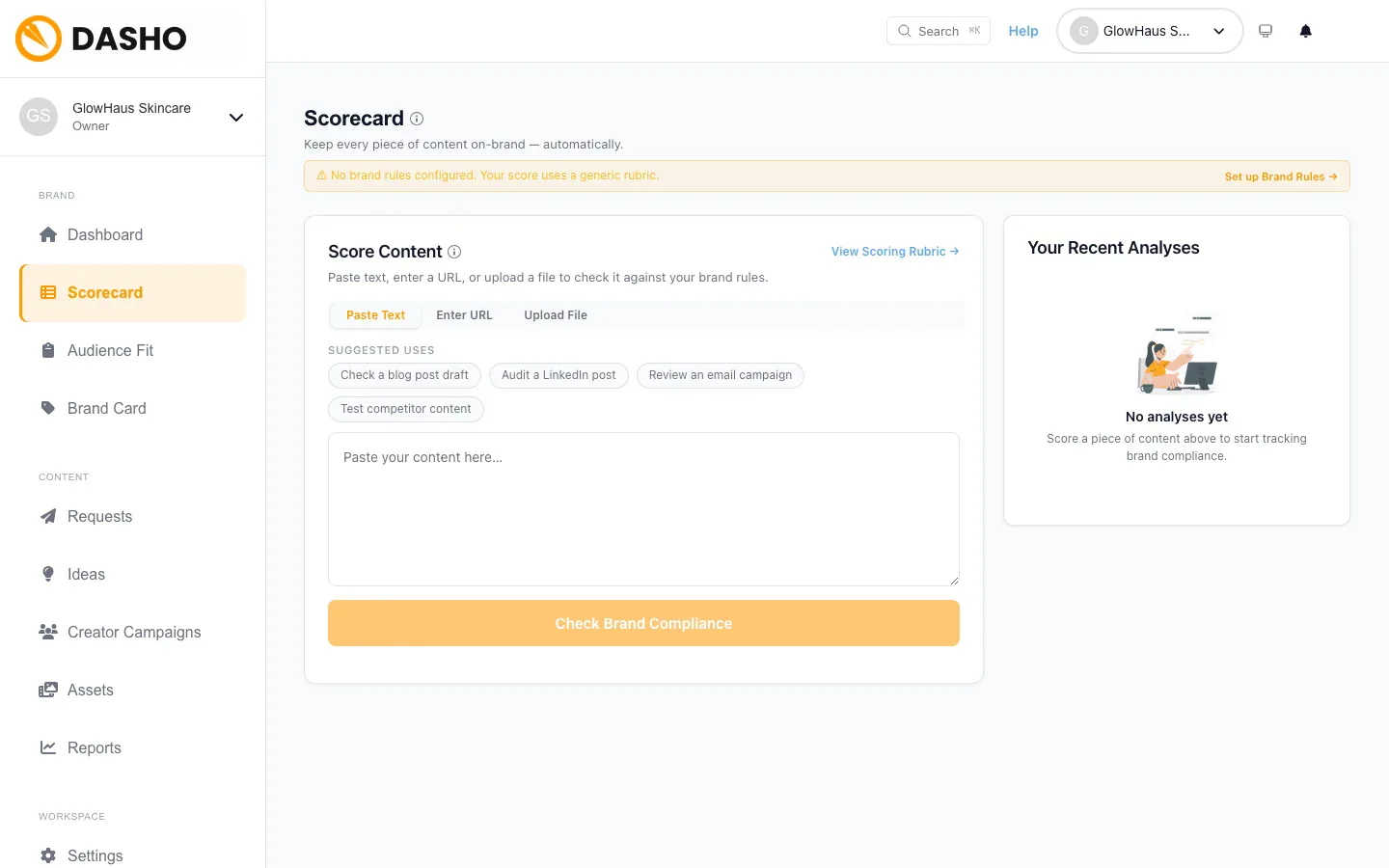
Brand governance software keeps your brand rules consistent across the work people actually ship. To choose the best brand governance software, start with the layer you need to govern: draft-level content, or brand assets and guidelines. If your risk sits in copy before approval, score drafts. If it sits in files, templates, and portals, manage assets.
Start by the layer you need to control
Most teams use “brand governance” to describe very different jobs. One tool checks whether content follows your voice, claims, product rules, and channel requirements before review. Another stores logos, templates, approved visuals, and brand guidelines so teams can find the right assets.
Both matter. They solve different failure points. If your biggest issue is off-brand creator copy, inconsistent product language, or legal review bottlenecks, asset portals will not fix it. If your issue is outdated logos, scattered files, or teams building their own templates, draft scoring will not fix that either.
Best for draft-level brand governance: Dasho
Dasho is the best brand governance software if you need to govern content at the draft level. You define your brand once in a Brand Card, then score every draft against a Content Scorecard before a human reviews it. That means each draft is checked against your own rules first, not a generic style model.
This is especially useful for creator and KOL content at scale, where volume is high and inconsistency gets expensive fast. Beauty and CPG teams use Dasho to keep tone, claims, product naming, and messaging aligned across many SKUs, launches, and creators. The point is governance before approval. Your team reviews scored drafts with clear reasons, not gut feel.
- Best fit: beauty, CPG, and multi-SKU brands running large creator or social programs
- What it governs: voice, claims, naming, message hierarchy, and other draft-level rules
- Where it helps: pre-review QA, creator workflows, agency output, launch content consistency
Best for asset management and guideline hosting
If your main need is a central place for assets, templates, and brand guidance, the strongest options sit in digital asset management and brand portal software. These tools are good at file control, approvals, distribution, and making sure teams pull from approved materials. They are less focused on scoring raw copy against your brand rules before review.
Frontify
Frontify is a strong choice for brands that want a modern brand portal with guidelines, assets, and collaboration around design systems. It is widely used by marketing and design teams that need one source for brand standards and approved files. If your governance problem is adoption of guidelines and easy access to assets, Frontify fits well.
Its limit is the draft itself. Frontify helps people find the right rules and files, but it is not built around scoring every piece of copy against a Brand Card before a reviewer steps in.
Bynder
Bynder is a solid fit for larger teams with serious DAM needs. It handles asset storage, metadata, search, approvals, and distribution at enterprise scale. If you manage a large asset library across regions or business units, Bynder is often on the shortlist for good reason.
Choose Bynder when file governance is the job. If your content risk comes from creators, product copy, or campaign drafts that need rule-based brand checks, you will likely need another layer for that workflow.
Papirfly
Papirfly is aimed at distributed brands that need local teams to work from approved templates while staying on-brand. It is useful when headquarters sets standards and field teams, markets, or partners need controlled flexibility. That makes it a practical option for template-driven execution.
It is less about checking whether draft copy follows your brand logic line by line. If your issue is local production from approved formats, Papirfly makes sense. If your issue is draft quality before approval, it is a different category.
Marq
Marq, formerly Lucidpress, is best known for branded templates and controlled content creation for non-design teams. It helps companies let more people create materials without starting from scratch or breaking layout standards. That is useful for sales, field marketing, and local operators who need speed with guardrails.
Like the others in this group, Marq is stronger on templates and design consistency than on draft-level scoring of messaging, claims, or creator copy. It fits teams solving layout and asset control first.
How to choose the best brand governance software
Map the failure to the system. If content is getting rewritten late, legal is catching preventable issues, or creators keep missing product and tone rules, you need draft-level governance. If people cannot find the right files, keep using old assets, or create off-brand collateral from scratch, you need asset and guideline governance.
- Choose Dasho for pre-review brand governance tied to your own brand rules
- Choose Frontify, Bynder, Papirfly, or Marq for assets, templates, portals, and guideline access
- Use both layers if you govern both copy and assets across many teams or markets
Our honest take
There is no single best brand governance software for every team. Dasho is the best option in this list if your real problem is draft consistency before human review, especially for beauty and CPG brands managing high-volume creator content. Frontify, Bynder, Papirfly, and Marq are better picks when the job is asset control, template use, and guideline distribution.
The mistake is buying an asset platform and expecting it to govern draft quality on its own. It will not. Pick the layer that matches where brand risk shows up in your workflow.
What is brand governance software?
Brand governance software helps you enforce brand rules consistently. Depending on the tool, it can govern draft content, brand assets, templates, guidelines, approvals, or all of the operational controls around how brand work gets produced and reviewed.
What is the best brand governance software for multi-SKU consumer brands?
For multi-SKU consumer brands, the best choice depends on where complexity shows up. If the hard part is keeping product claims, naming, and messaging consistent across creator content and campaign drafts, Dasho is the stronger fit. If the hard part is asset sprawl and template control, look at Bynder, Frontify, Papirfly, or Marq.
What is the difference between brand governance software and brand management software?
Brand management software is a broader label. It can include planning, collaboration, assets, campaigns, and reporting. Brand governance software is narrower. It focuses on enforcing the rules, whether that means approved assets, template restrictions, workflow controls, or scoring drafts against your brand standards before approval.
The same system runs underneath everything
Brand Card
Voice, tone, and rules defined once per brand, the source of truth every draft is measured against.
Content Scorecard
Every draft scored for brand compliance before a human reviews it, catching drift before it ships.
Governed workspaces
One workspace per brand: briefs, drafts, assets, and approvals in a single tracked place.
Approvals that move
A defined brief → draft → review → approve flow, so sign-off takes minutes, not days.
Have us run it for you
Done-for-you content operations, governed against your Brand Card.
Explore Managed Services →Run it yourself
Self-serve governed workspaces for agencies and lean teams.
Explore the platform →Keep every brand on-message
Start free and run it yourself, or have us run it for you.